
A marketing lead asks ChatGPT for the best software in a category. The answer names three competitors, describes their strengths, and omits the lead's company. The team learns about the gap when a prospect repeats the answer on a sales call.
AI answers can shape a buyer's shortlist before they visit a website. Google reported that AI Overviews were available in more than 200 countries and territories and in over 40 languages in its May 2025 expansion announcement. Ranking reports alone cannot show whether a brand was named, recommended, or cited in those answers.
The tools below address that blind spot through different measurement jobs: mention tracking, citation research, site readiness, or a fuller workflow that connects measurement with content work. The comparison includes eleven platforms, grouped by practical use rather than feature count. Prompt allowances and per-domain pricing can change actual costs, so match those limits and engine coverage to your team size and reporting needs before choosing.
If you are running out of ideas and don’t know what to write or talk about, our random topic generator can help you quickly find simple and interesting topics for writing, conversations, and brainstorming with just one click.
Table of Contents
- 1. Outrank
- 2. Otterly.AI
- 3. Peec AI
- 4. Profound
- 5. Scrunch
- 6. Ahrefs Brand Radar
- 7. Semrush AI Visibility Toolkit
- 8. AthenaHQ
- 9. SE Visible
- 10. LLMrefs
- 11. AIclicks
- Starting prices, entry-level scope, and best-fit use cases across the ten AI visibility tools
- Choosing the Right AI Visibility Tool for Your Next Decision
Related Articles
- Best AI Visibility Tools for 2026: 10 Platforms Compared
- Best Social Media Video Maker: 10 Tools Compared for 2026
- AI SEO Platform: What It Does and How to Choose One
- 7 Review Management Software Tools: A 2026 Buyer’s Guide
- Medical Virtual Assistant Services: A Practical Guide
- How AI Helps Brands Localize Video Campaigns
- AI Tools for Character Consistency in Brand Ad Filmmaking
1. Outrank
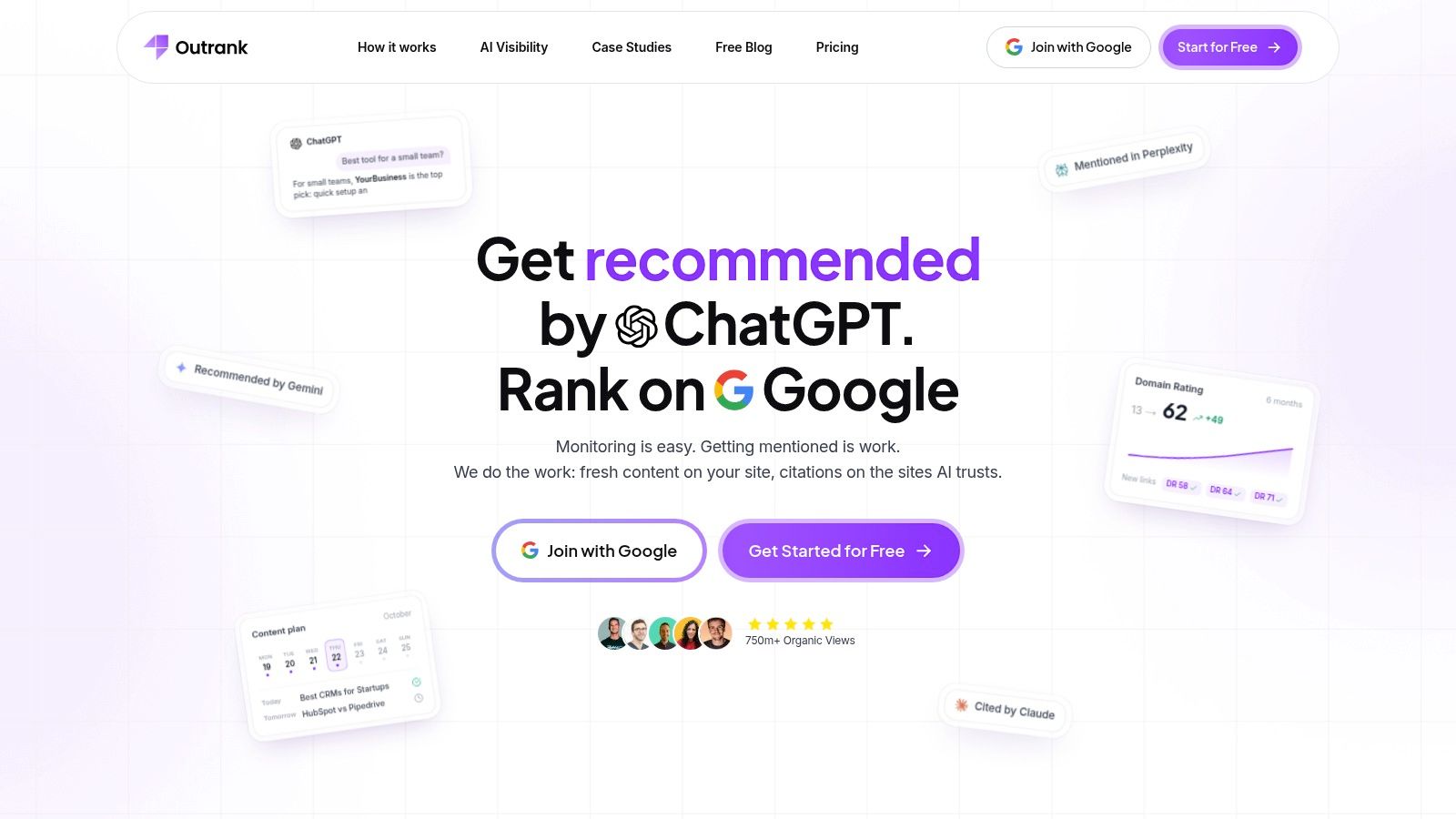
Outrank fits teams that need a content workflow, not just a visibility report. The platform combines keyword research, AI-assisted article and image creation, and publishing to WordPress, Webflow, or Notion. Its value is the handoff it removes: a team can move from identifying a content gap to preparing and publishing a page without managing each step in separate tools.
For example, a tracker may show competitors cited for a buyer question while the team's response waits in a writing queue. Outrank helps shorten that production cycle by generating long-form articles in the brand's voice and supporting the publishing workflow. The resulting pages still need editorial review and a clear reason to be cited. Automation can speed up production, but it does not guarantee that answer engines will use the content.
Where Outrank Fits Best
- Content gaps first: Choose it when the team needs pages created to address missing coverage, rather than a tool focused mainly on measuring mentions.
- Small teams publishing often: Multi-user access and API integrations can support a recurring content workflow. Check the plan's limits and terms before relying on it for a specific publishing volume.
- Citation-driven editing: Outrank's AI citations feature connects the workflow to citation research, helping teams consider which sources answer engines rely on.
The trade-off is measurement depth. Teams that need detailed prompt tracking across multiple engines should pair Outrank with a dedicated tracker. For a small team whose main bottleneck is producing and publishing citable content, Outrank offers a more direct workflow. Test the output and publishing process against your own editorial standards before making it the center of your system.
2. Otterly.AI
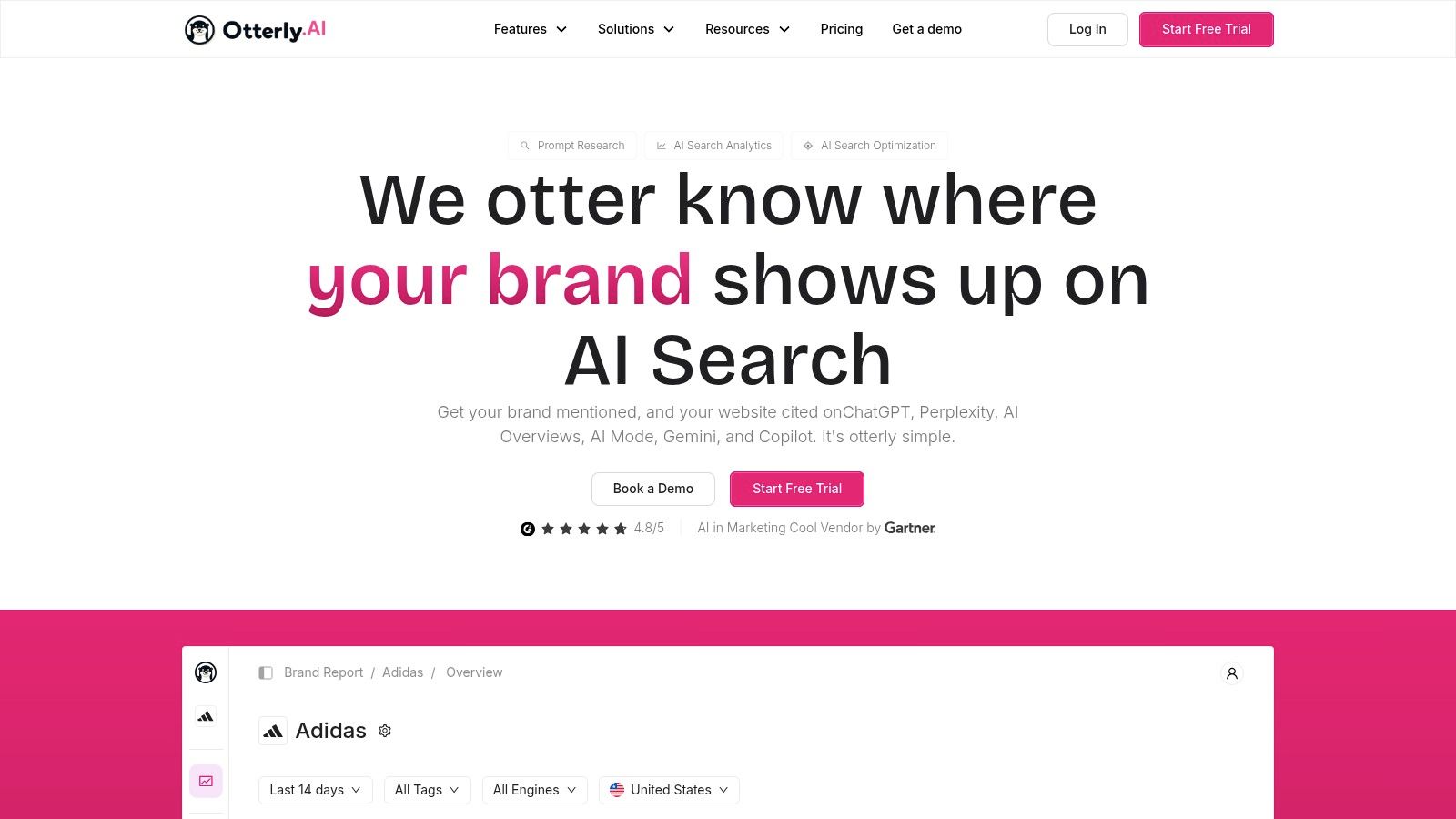
Otterly.AI is the low cost way to establish a first baseline. It tracks prompts and brand visibility across ChatGPT, Google AI Overviews, Perplexity, and Microsoft Copilot on listed plans, and reports mentions, citations, sentiment, and competitor visibility. Lite is listed at $29 per month, or $25 per month billed annually, with a free trial available.
The useful part for small teams is that results turn into tasks. Prompt research, content audits, and optimization recommendations sit alongside the monitoring, so a blogger or small content team can move from a missing mention to a page fix without buying an enterprise platform. Daily tracking and multiple team members are included in listed plans, which keeps the entry tier workable.
- Clear entry pricing: Publicly listed, with no demo call needed to start.
- Add on engines cost more: Claude, Gemini, and Google AI Mode are paid add ons, not core coverage.
- Small prompt allowance: The entry plan suits a baseline, not broad category coverage.
Higher plans add API access, MCP, and Looker Studio reporting. Inexpensive doesn't mean complete, but for a first honest read on AI presence, Otterly.AI is enough.
3. Peec AI
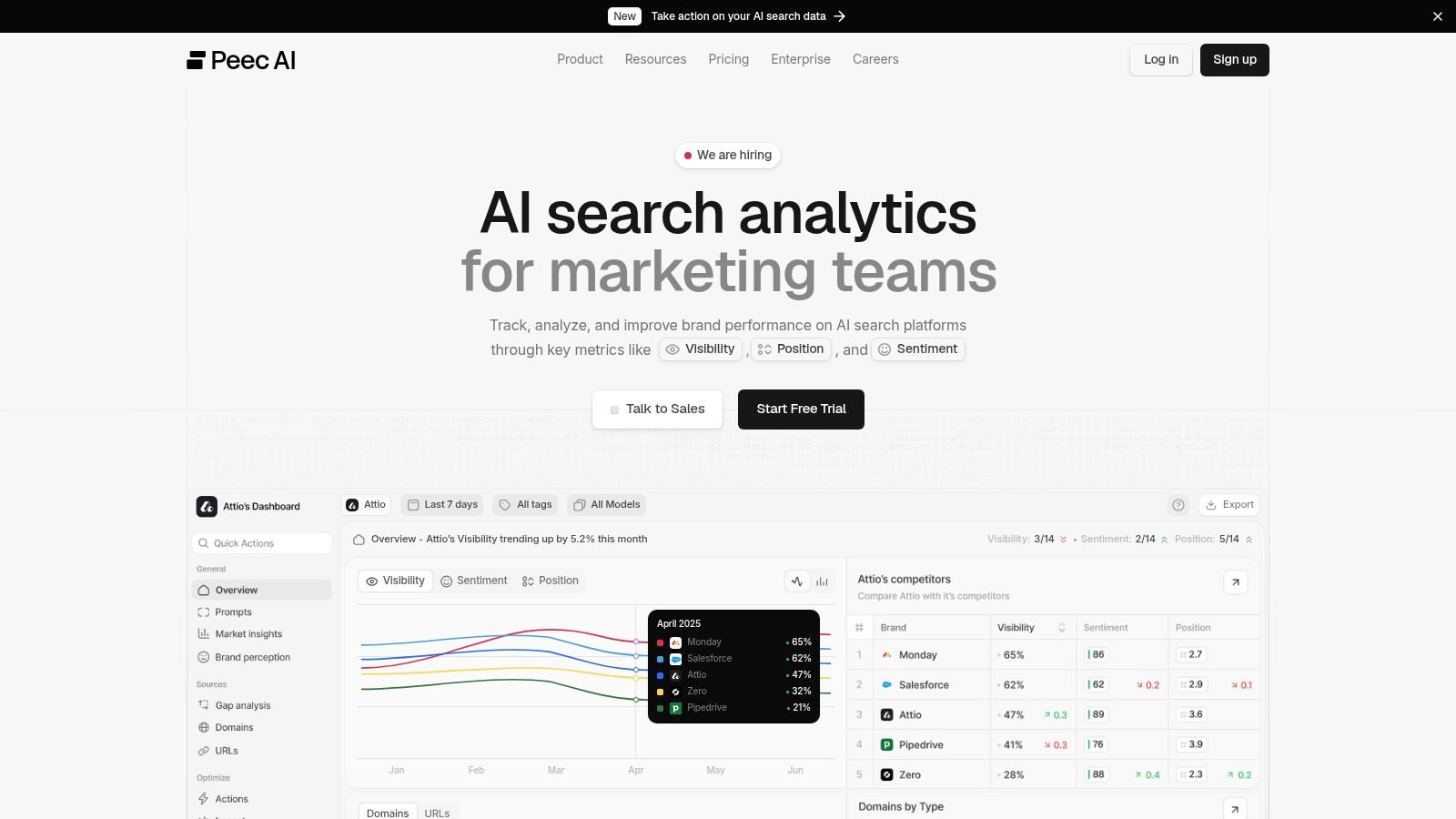
Peec AI is a dedicated analytics platform for teams that report on AI visibility regularly. It tracks selected prompts and models and reports visibility, citations, sentiment, and competitor performance at prompt level. Listed plans include Starter, Pro, and Advanced with 50, 150, and 350 prompts respectively.
Prompt design decides whether those numbers mean anything. HubSpot's answer engine optimization tools guide notes that leading platforms track cited URLs, cited domains, and prompt level results across answer engines, which makes a repeatable buyer prompt the key unit of measurement. Teams should segment prompts by funnel stage, geography, and competitor intent, then hold the set steady over time.
Practical rule: A prompt set that changes every month produces charts, not trends. Freeze the core set and add new prompts in a separate group.
Peec AI includes unlimited users in listed brand plans, CSV exports, and Looker Studio plus API access on higher tiers, with agency plans for multi client work. It stays focused on analytics, so teams wanting content generation need a separate tool. Pricing has changed before, so current plan details deserve a check before budgeting.
4. Profound
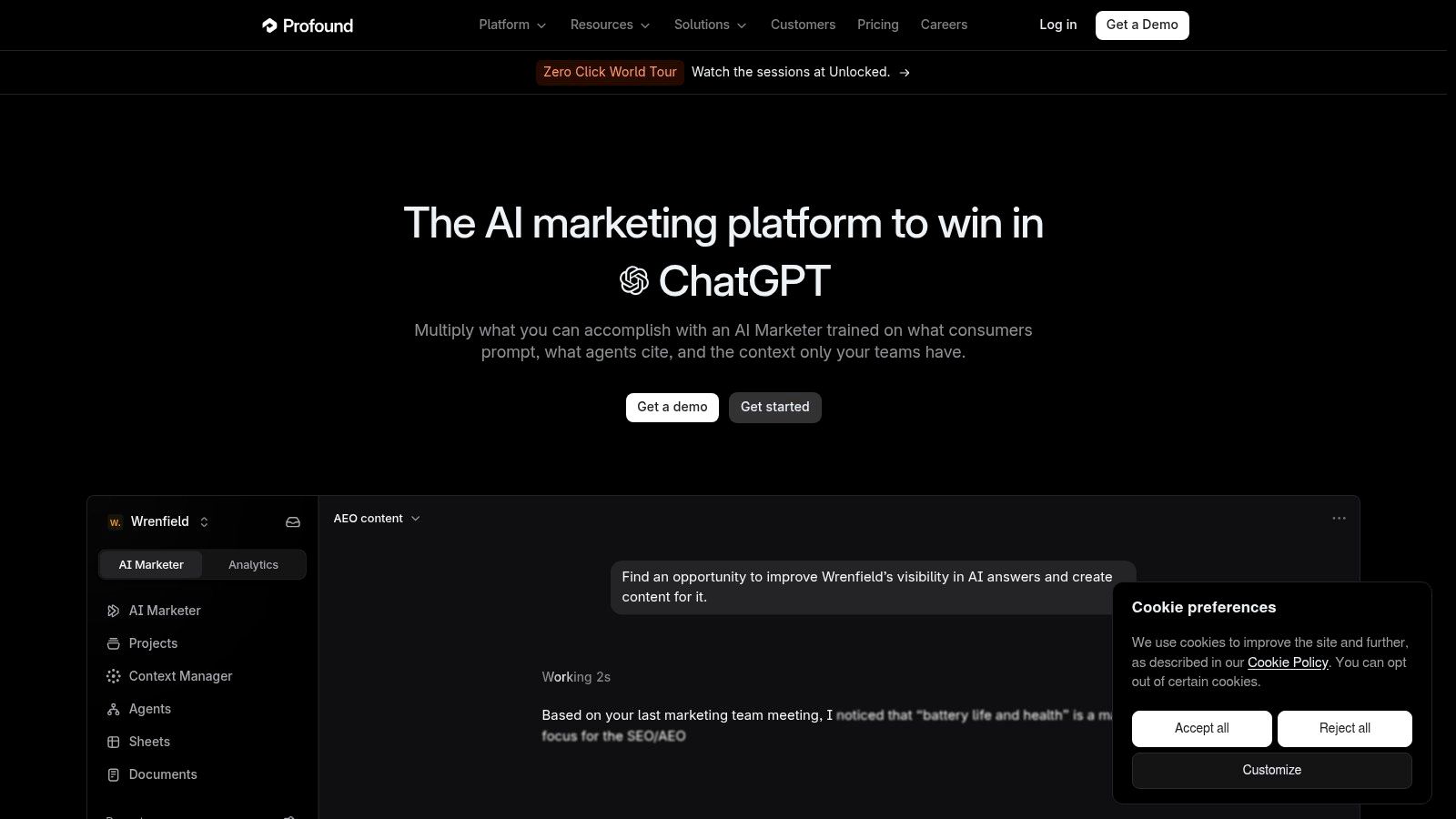
Profound combines visibility analytics with content and workflow tools for teams that need more than a mention tracker. It tracks brand presence, visibility, sentiment, and competitors, and adds citation analytics and page level performance views so teams can see which pages earn citations. Starter is listed at $99 per month billed yearly for 50 ChatGPT prompts. Growth is $399 per month billed yearly for 100 prompts across three answer engines.
The Starter limitation is the main catch. At that tier the platform tracks ChatGPT only, which is a narrow read for a category where buyers split across engines. Broader coverage, integrations, and enterprise options require higher tiers, and credit based agent usage needs review before scaling.
What Profound Does Well
- Measurement plus action: AI agents help with content creation and optimization inside the same platform.
- Self serve entry: Teams can start without an enterprise contract, then upgrade for coverage.
- Complex reporting: Suits marketing teams coordinating across regions and product lines.
Teams producing localized campaigns across markets can also review approaches to localizing video campaigns with AI when regional answer differences start to matter. Profound earns its price when a team has analysts and writers ready to act on the data.
5. Scrunch
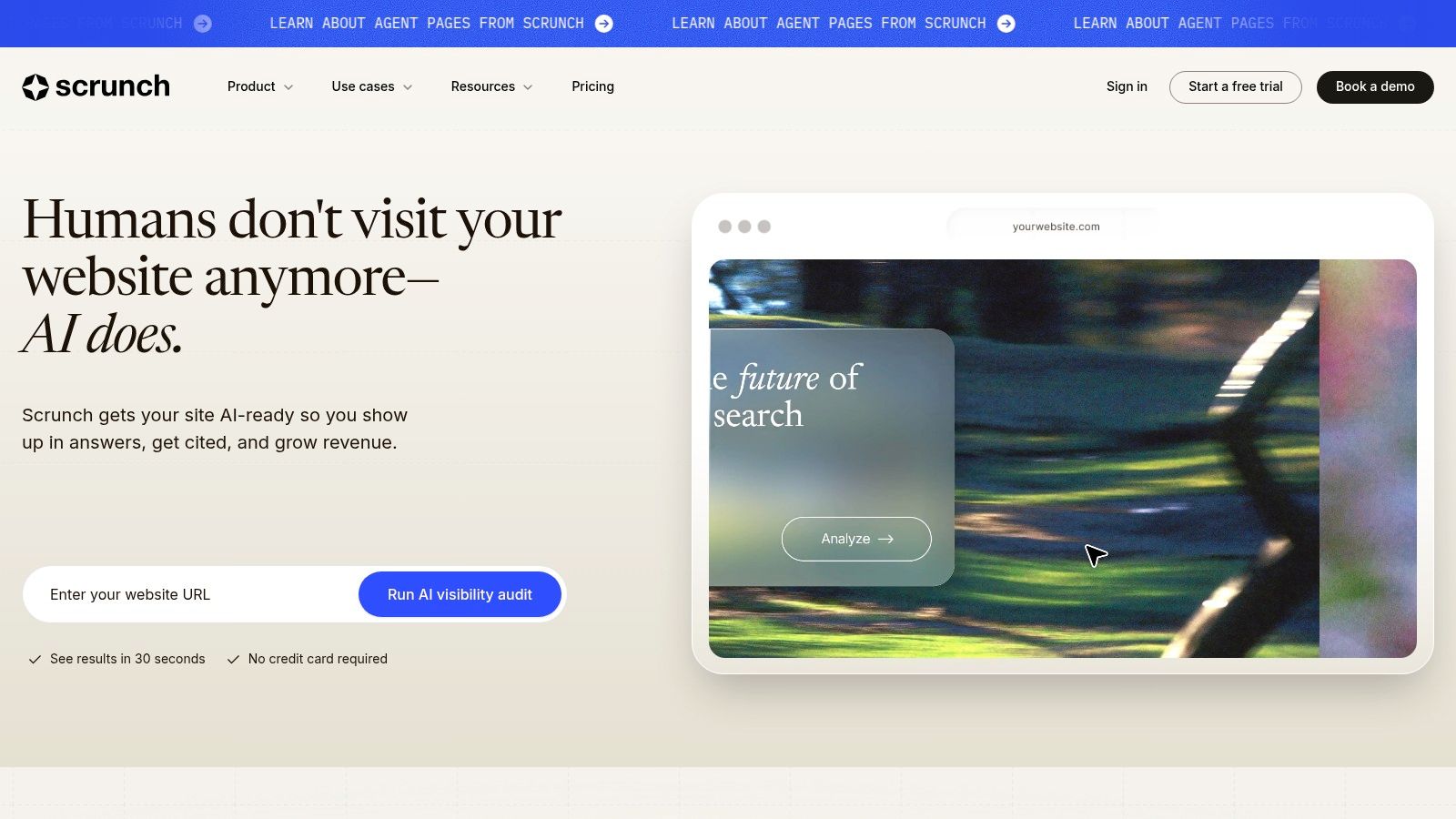
Scrunch takes the site readiness route. Its Agent Experience Platform combines visibility monitoring with website auditing, content optimization, and content delivery. Core is listed at $250 per month, with custom Enterprise pricing and separately priced agency plans.
The distinctive move is serving AI agents an optimized version of site content while preserving the human facing experience. That makes Scrunch implementation oriented rather than reporting focused. It tracks mentions, citations, competitors, and AI related traffic, audits technical and content factors that may block AI access, and can show AI bot visits through supported CDN and hosting integrations.
That traffic angle matters commercially. Adobe's analysis of generative AI referral traffic found that traffic from generative AI referrals increased more than tenfold between July 2024 and February 2025. Connecting bot access to actual referral visits helps teams separate a crawling problem from a content problem.
Scrunch costs more than entry level monitors and doesn't provide general purpose content generation. Organizations with developers able to act on technical findings get the most from it. Small publishers without that capacity will likely pay for machinery they can't use.
6. Ahrefs Brand Radar
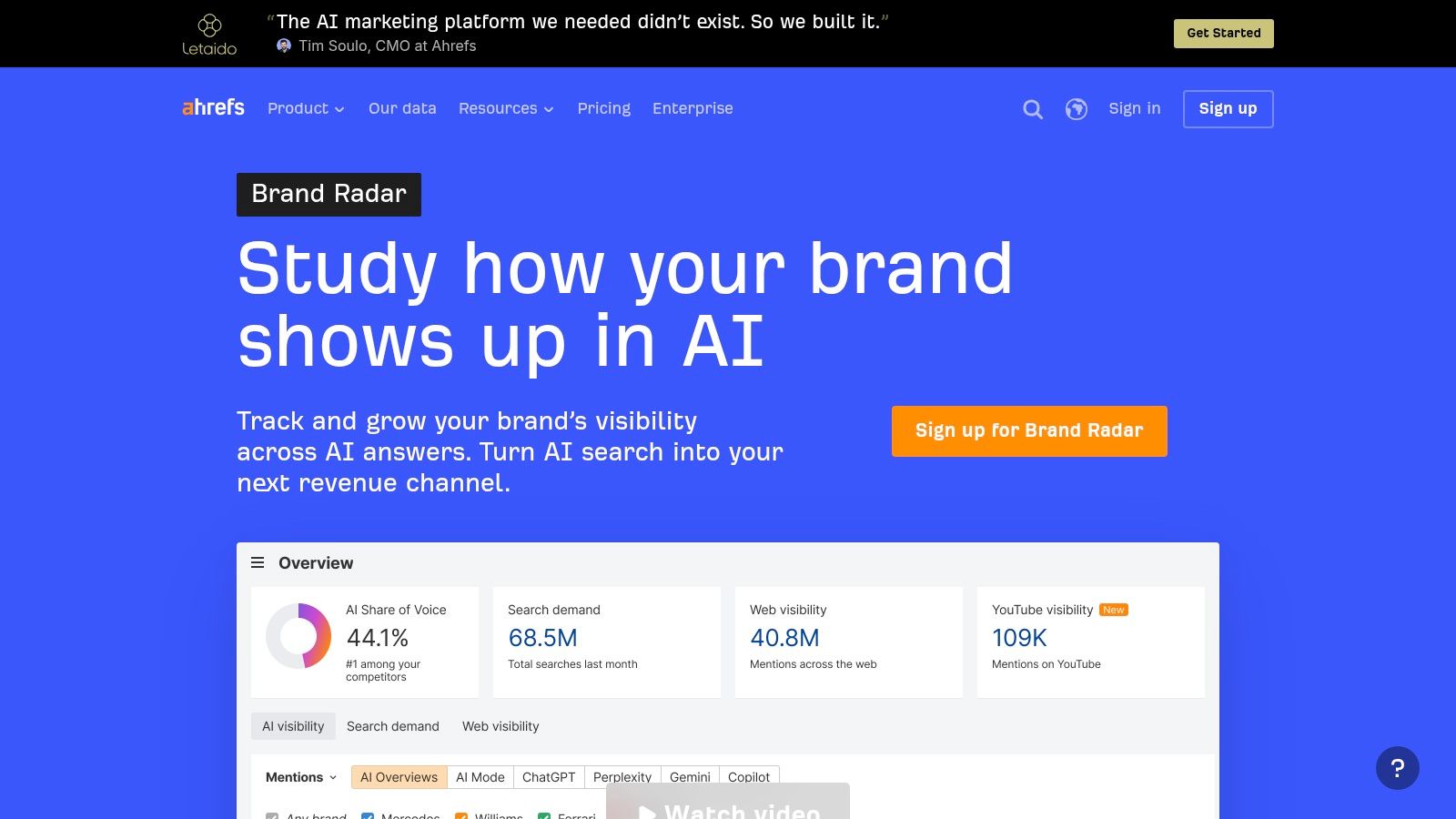
Ahrefs Brand Radar connects AI visibility research with Ahrefs search data. It tracks visibility across platforms including ChatGPT, Gemini, Perplexity, Copilot, and Google AI surfaces, and reports mentions, citations, and share of voice. The AI Visibility Index starts at $199 per month. Custom prompt tracking has separate pricing starting at $50 per month for a package of checks.
The large pre collected prompt index is the draw. Content teams can investigate prompts that mention a brand, pages cited by AI, and competitor performance without first building their own prompt list. Custom prompts then monitor specific buyer questions, and research extends to web, YouTube, and Reddit discovery surfaces.
- Best for discovery: Search backed prompt data surfaces topics a team didn't know to track.
- Modeled, not counted: The broad Index is a sampled view, not a count of every real user interaction.
- Two products, two jobs: The Index and custom prompt tracking serve different purposes and budgets.
Teams already paying for Ahrefs get the smoothest value. Standalone buyers should weigh rising costs at larger custom check volumes against dedicated trackers.
7. Semrush AI Visibility Toolkit
The Semrush AI Visibility Toolkit brings AI tracking into an established SEO workspace. It tracks custom prompts and brand mentions across ChatGPT, Google AI, Gemini, and Perplexity, and includes competitor research, prompt research, and an AI readiness site audit. The Base toolkit is listed at $99 per month per domain, billed annually, with 25 custom prompts.
Per domain pricing is the budget line to watch. One site is manageable, but agencies and multi brand teams multiply that cost quickly, and 25 prompts is a thin allowance for a broad category. HubSpot's LLM visibility tools comparison reports that Semrush One lists 50 daily prompts on its Starter tier, which shows how much packaging varies between bundles. Buyers should confirm exactly which prompt volume their chosen plan includes.
Who Should Shortlist It
- Existing Semrush users: AI reports sit beside familiar SEO and content workflows.
- Single domain teams: Per domain pricing stays predictable.
- Audit minded teams: The AI readiness audit flags site level issues alongside mentions.
Broader marketing content solutions for businesses can help teams plan the follow up work Semrush identifies. Daily, weekly, and monthly updates cover listed data, though teams outside the Semrush ecosystem may find a specialist tracker cleaner.
8. AthenaHQ
AthenaHQ pairs prompt and response analysis with competitor insights, content recommendations, and an AI agent. The free Essential tier is listed with 300 credits, which gives teams a way to explore before committing. Starter is $295 per month with 3,600 credits and lists coverage across a wider set of AI models.
Credits are the pricing model to understand here. Usage based billing can suit teams with uneven monitoring needs, but it makes monthly cost harder to predict than a fixed prompt allowance. API access or extra credits may cost more, and teams should verify which features and models their tier includes.
A free tier is most useful as a methods test. Run the same buyer prompts twice and check whether the raw answers and cited sources stay visible in the export.
Higher tiers add country level support, exports, integrations, and optimization features. For solo bloggers and small websites, the paid Starter price is steep relative to simpler monitors. Growth teams that want recommendations attached to the data, rather than raw tracking alone, are the better fit for AthenaHQ.
9. SE Visible
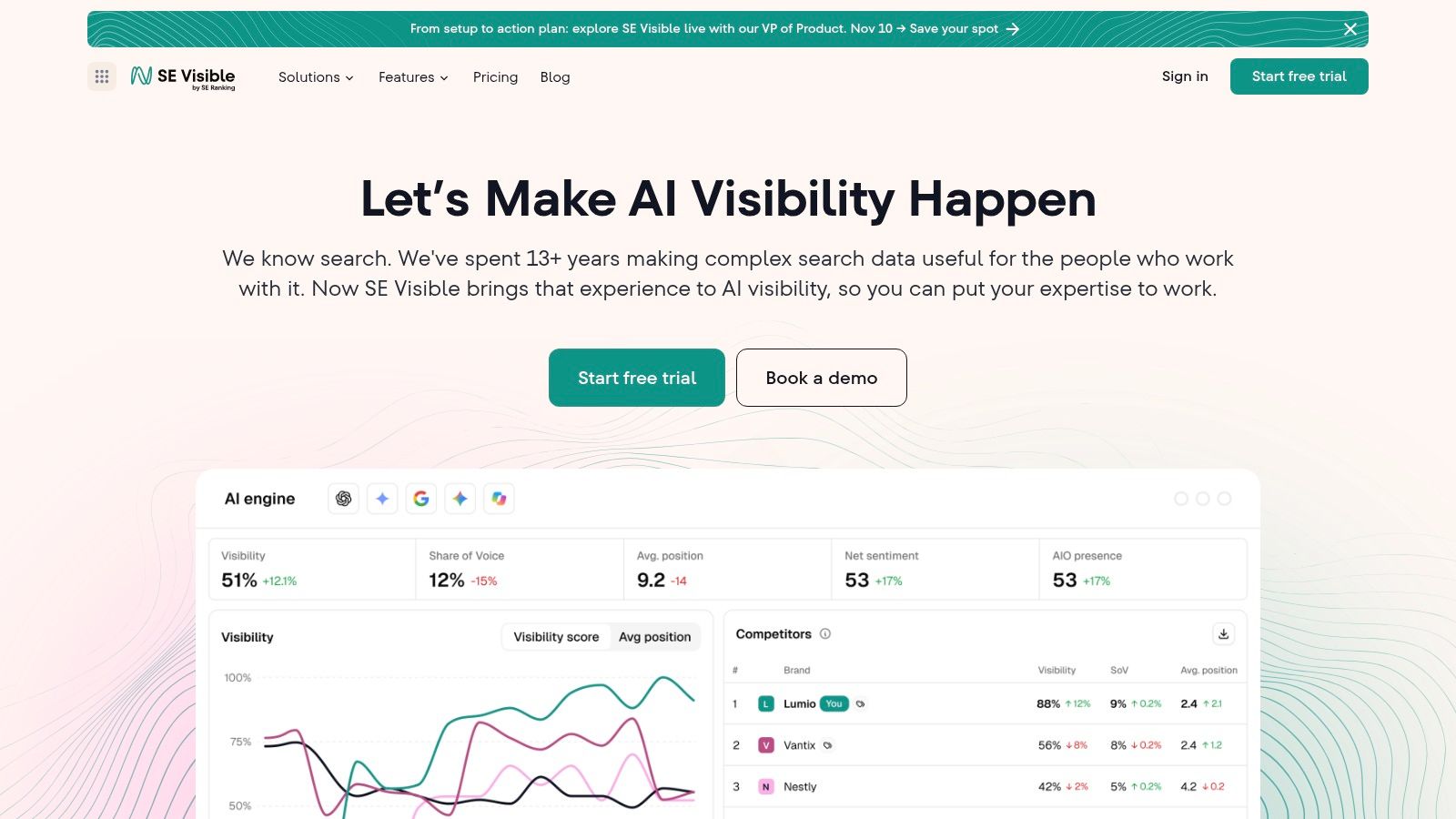
SE Visible is SE Ranking's dedicated AI visibility product, available standalone or as an add-on. It tracks brand visibility across ChatGPT, Google AI Overviews, AI Mode, Gemini, and Perplexity. Every SE Ranking subscription includes a Start package with 25 prompts. Paid add-on plans offer 75 prompts on Basic, 200 on Core, and 1,000 on Agency.
The stated prompt allowances make it easier to estimate how monitoring capacity scales with each tier. Users can add prompts and group them by topic. Daily tracking is standard, while higher plans also offer weekly tracking. Listed add-on plans include exports, API and MCP access, plus unlimited user seats.
- Low-friction start: Existing subscribers can try the included 25 prompts without adding another vendor.
- Clear scaling steps: Each tier states its prompt allowance, making it easier to compare capacity.
- Platform check needed: Confirm that the engines covered match the ones your audience uses.
SE Ranking subscribers may find the included package a practical starting point. Teams comparing standalone options should weigh the prompt allowance and reporting access against dedicated trackers before committing. If exported reports are part of a broader file-management workflow, guidance on solving Finder search problems covers locating files on macOS.
10. LLMrefs
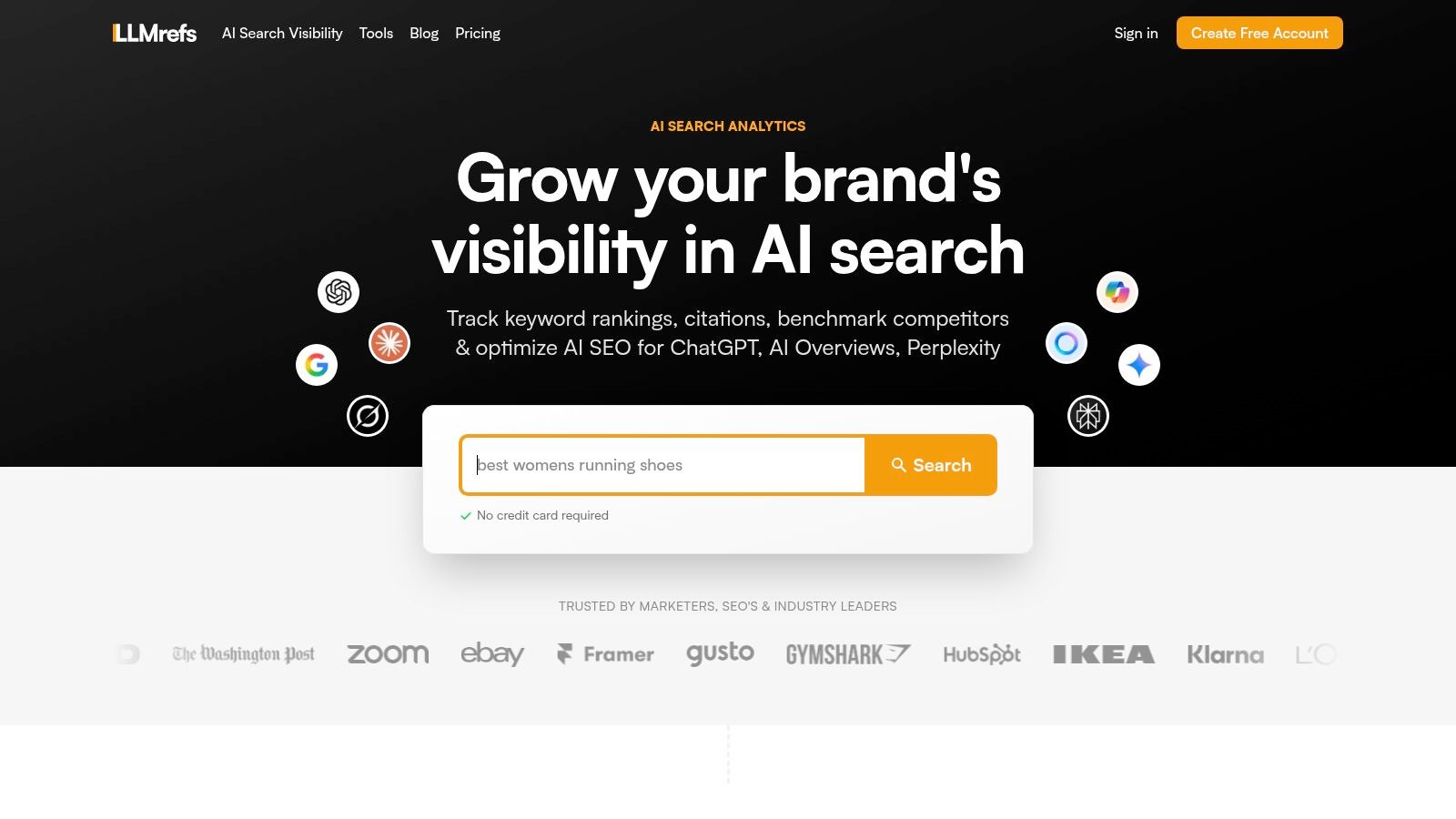
LLMrefs organizes AI search analytics around keywords and topics rather than isolated prompts. It generates related prompts, reports brand share of voice, and identifies sources and URLs cited in AI answers. The All in One plan is listed at $79 per month, with a 7 day trial.
This topic-first approach supports editorial planning. Start with a theme, review which sources appear in AI answers, then use the cited URLs to shape a content refresh or outreach list. Projects, team access, CSV exports, and API access support multi-topic and client-domain workflows. Bundled utilities include an AI crawlability checker and a Reddit thread finder.
Cited sources in AI answers can vary from day to day, so a single reading may not represent a durable trend. LLMrefs refreshes data weekly, which can smooth short-term fluctuations but may be too slow for teams that need daily monitoring. Its metrics reflect sampled AI responses, not every user's personalized results. Use the tool for topic-level citation research and trend direction, then weigh that slower refresh cadence against your reporting needs.
11. AIclicks
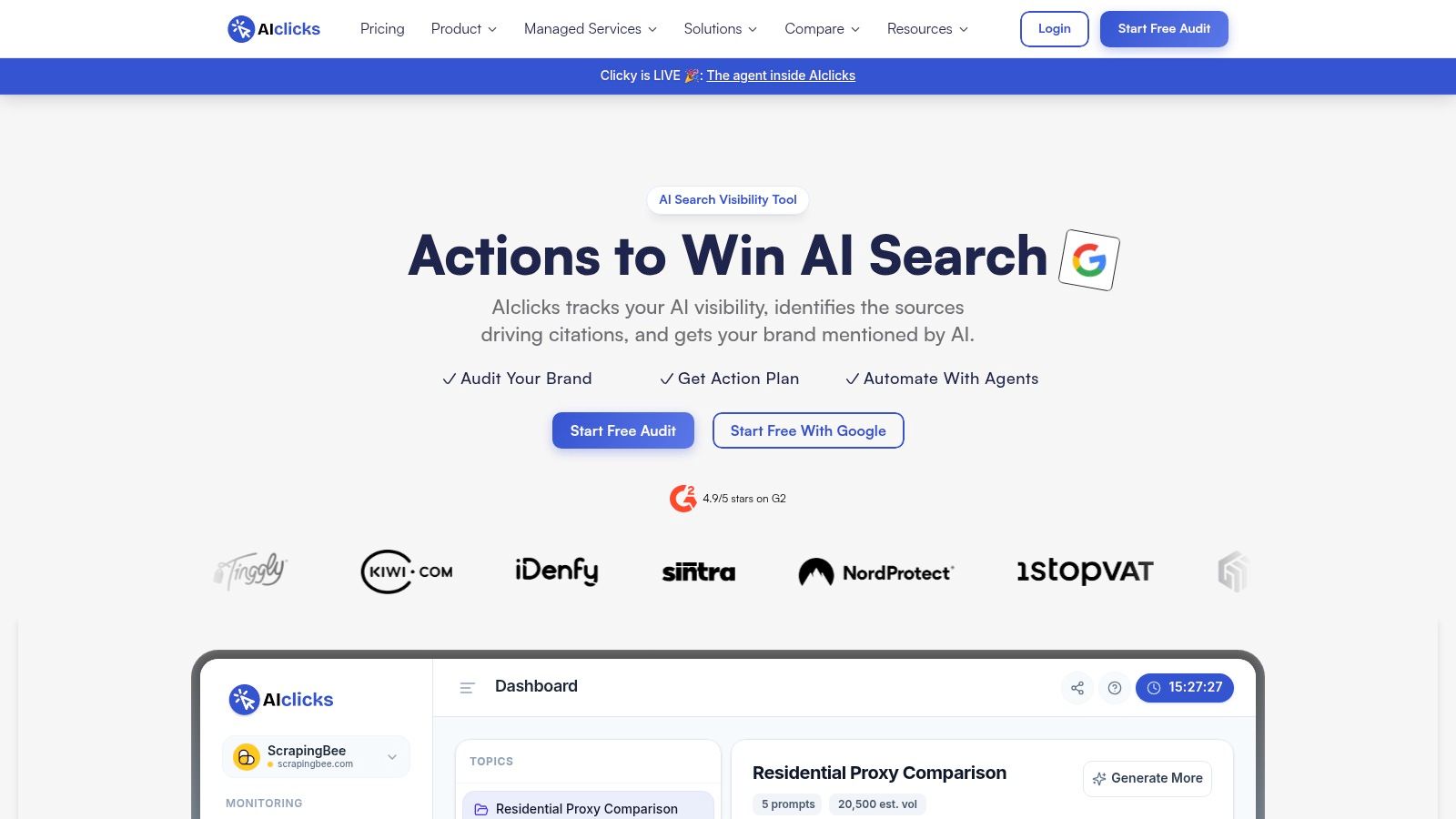
AIclicks pairs monitoring with recommendations for content and outreach. It shows where brands appear, which sources get cited, how competitors perform, and how AI answers describe a brand. Listed plans start at $59 per month, with Pro at $189 and Business at $499, and a 3 day free trial is offered.
Country filters and daily monitoring make it practical for teams selling across borders, since AI answers vary by market. Competitor and sentiment analysis sit beside the mention data, and the platform recommends content creation and citation building opportunities rather than stopping at a score.
Trade Offs to Test
- Short trial window: Three days is enough to check setup and data quality, not to judge trends.
- Plan based limits: Tracked prompts, websites, and model coverage expand only on higher tiers.
- Vendor stated coverage: Methodology claims should be tested against the team's own markets and prompts.
AIclicks suits teams that want suggested next steps attached to each report. Disciplined buyers will use the trial to replay identical prompts and inspect raw answer text before paying.
Starting prices, entry-level scope, and best-fit use cases across the ten AI visibility tools
The right comparison depends on the job: creating content, tracking prompts, researching citations, or connecting visibility data to existing SEO workflows. Price and entry-level limits matter too, especially where plans charge per domain or cap prompt volume.
| Item | Listed Starting Price | Entry Plan Scope | Free Option | Best For |
|---|---|---|---|---|
| Outrank | Not listed | AI-generated SEO articles, keyword research, and publishing tools | Not stated | Teams seeking AI-assisted SEO content creation and publishing |
| Otterly.AI | $29/month, or $25/month billed annually | Lite plan with prompt tracking, visibility reports, and optimization tools | Free trial | Small teams establishing an AI visibility baseline |
| Peec AI | Plans priced by prompt tier | Starter plan with 50 prompts | Not stated | Marketing teams and agencies tracking prompts and competitors |
| Profound | $99/month billed yearly | Starter plan with 50 ChatGPT prompts | Not stated | Teams combining AI visibility analytics with content workflows |
| Scrunch | $250/month | Core plan with monitoring, audits, and content optimization | Not stated | Organizations needing AI visibility analysis and site-level implementation |
| Ahrefs Brand Radar | $199/month for AI Visibility Index | Visibility research with a large pre-collected prompt index | Not stated | Ahrefs users researching AI visibility and content opportunities |
| Semrush AI Visibility Toolkit | $99/month per domain, billed annually | Base toolkit with 25 custom prompts, research, and site audit | Not stated | Teams integrating AI visibility tracking with Semrush SEO workflows |
| AthenaHQ | Free Essential tier; paid Starter is $295/month | Essential tier with 300 credits | Free Essential tier | Teams exploring multi-platform monitoring and content recommendations |
| SE Visible | Start package included with SE Ranking subscription | 25 prompts; paid add-ons offer larger prompt allowances | Included Start package with an SE Ranking subscription | SE Ranking users adding AI visibility tracking to SEO workflows |
| LLMrefs | $79/month | All in One plan with keyword and topic research, projects, and exports | 7-day free trial | Content marketers and agencies tracking topics, citations, and share of voice |
| AIclicks | $59/month | Entry plan with visibility monitoring and recommendations | 3-day free trial | Teams seeking AI visibility reports and suggested content or outreach actions |
Treat the table as a starting point, not a feature-count ranking. For prompt tracking, compare the allowance with the number of topics and competitors you need to monitor. Peec AI's entry scope is 50 prompts, while Profound's Starter plan also lists 50 ChatGPT prompts. Semrush charges per domain, so teams managing several sites should account for that model before comparing its annual price with flat plan prices.
The tools also serve different measurement jobs. Outrank focuses on content production and publishing. Otterly.AI, Peec AI, and AIclicks offer entry points for monitoring brand visibility and prompts. Ahrefs Brand Radar and LLMrefs support visibility and citation research, while Scrunch includes audits and site-level implementation. Semrush and SE Visible may fit teams already working within those SEO platforms. AthenaHQ offers a free tier with a defined credit allowance, while its paid Starter plan has a higher entry price.
For a small team, a trial or free tier can establish whether the tool's reports answer a real question before committing to a larger plan. Agencies and teams with multiple sites should check prompt allowances, project limits, and per-domain pricing against their reporting workload. Choose by the measurement job and the limits your team will reach, rather than by the longest feature list.
Choosing the Right AI Visibility Tool for Your Next Decision
Start with the question that needs answering. If the only need is knowing whether a brand appears in AI answers, a lower cost monitor such as Otterly.AI, Peec AI, or AIclicks may be enough. If the need is finding which pages get cited and what to change, Ahrefs Brand Radar, LLMrefs, or Profound fit better. If AI bots face technical barriers reaching a site, Scrunch is built for that work, and if the bottleneck is producing citable pages, Outrank addresses production rather than measurement.
Mention counts alone can mislead. The Columbia Journalism Review Tow Center comparison of eight AI search engines found that generative search systems can have substantial problems accurately retrieving and citing news content. A brand can be visible and still be described wrongly, priced wrongly, or left off the final shortlist. Tools that expose raw answer text, sentiment, and cited URLs let teams judge quality, not just presence.
- Solo operators and small sites: Start with the cheapest credible baseline, then upgrade only when prompt volume becomes the limit.
- Growing content teams: Prioritize citation level data and exports, because the output should become a refresh and outreach backlog.
- Agencies: Unlimited seats, multiple projects, and client ready reporting matter more than one extra engine.
- Enterprise teams: Geographic controls, historical retention, and integrations decide whether the data survives contact with internal reporting.
Before buying, test each shortlisted tool with 20 to 30 prompts buyers ask, split across discovery, comparison, and purchase intent. Run the set twice, days apart, and check whether results are stable enough to act on. Confirm which engines and models the specific plan includes, since entry tiers often track fewer engines than marketing pages suggest. Then compare monthly cost per tracked prompt, not the headline price, because allowances range from a handful of prompts to agency scale volumes.
The most attractive visibility score isn't the goal. A tool that shows its sources, its prompt level detail, and its limits gives a team decisions it can defend.
Vendor claims about coverage and methodology should be treated as testable, not settled. Ask whether visibility means any mention or a top recommendation, inspect the cited URL list for a known category prompt, and verify regional consistency if the audience spans countries. Teams that skip this step often discover the constraint after the annual contract is signed. Teams that run the test usually find the right tier quickly and spend less than expected.
Pick one tool from the job based shortlist above, load it with 20 to 30 real buyer prompts this week, and record a baseline before changing any content. Then fix the clearest gap, whether that's a missing comparison page, an outdated pricing page, or a blocked AI crawler, and recheck the same prompts. That single loop turns AI visibility from a vague worry into a measured channel, and it shows within one cycle whether the chosen platform earns its seat in the stack.